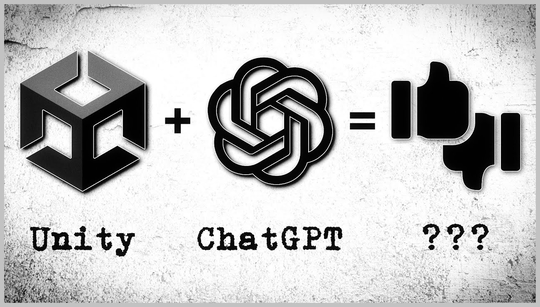

Unity’s New AI Tools Spark Criticism
Unity’s new AI programs, UnityMuse and UnitySentis, have recently been the subject of negative feedback from game developers. Many artists and developers find these tools impractical, unethical, or legally dubious. The announcement of these tools took place at the Unity Developers Day conference. During the presentation, the tools' limitations and lack of transparency were criticized, with developer Mike Bithell calling for disclosure of the datasets used.
UnityMuse and UnitySentis are designed to train AI in making art and design decisions for game developers. The announcement video showcased various games that have already utilized these tools, including Warhammer 40,000 Inquisitor and Call of Duty Modern Warfare.
While some developers praised the tools, others expressed concerns about the legal status of AI in general, as well as the datasets used for training. Unfortunately, Unity's announcement did not address these concerns or provide any information about the datasets used. Consequently, lawsuits are targeting both the tools and the companies utilizing them.
"Can we please have disclosure on the data sources used to train these AI?" tweeted developer Mike Bithell. "Given the legal state of this tech, I genuinely hope it’s all open source. But I’m worried it’s not."
Bithell continued, raising further questions and skepticism, "I would like to see what licensed third-party LLMs (Licensees of Linden Lab) they have used to train these AI."
Unity also faced criticism from 3D artist Leslie Van den Broeck, who accused the company of prioritizing hype over developers' needs. Van den Broeck stated, "Unity, we need a solution for artists who want to work on VR. Not just tools that make it easy to create assets that only AI will use. We want to create real experiences for people to play."
Unity's official blog post announcing the tools did not provide any reassurance about the sources of information, contributing to doubts about the company's actions. The post stated, "Artificial intelligence is a game changer. And we’re not just talking about the potential to create worlds populated with characters that think, act, and speak with realistic autonomy. We’re talking about the possibilities to use AI to create entirely new art and gameplay experiences."
The lack of disclosure regarding the LLMs used by Unity is reminiscent of the "blame it on the intern" mentality, where companies avoid responsibility by attributing actions to unpaid or low-paid workers. Some perceive Unity's actions as actively hostile toward workers in the industry, with one developer claiming, "This is a company that is actively trying to replace artists and designers. They don’t care about us, they never have."
However, there are defenders of Unity who argue that the tools can be used intelligently and ethically. They highlight the positive work being done with AI in games, such as studios collaborating directly with creators to train AI models on their work or using deep learning models to generate concept work for inspiration or reference. These individuals believe in the potential of AI but emphasize that it requires thoughtfulness and discipline. They cite Microsoft's Project Genius tools as an example of this thoughtfulness and express hope for similar considerations from Unity.
PC Gamer has reached out to Unity for comment on these concerns. It is worth noting that the author of the original article is not affiliated with PC Gamer or any specific publication, nor do they have a contract with PC Gamer or work as an employee of the company.