
The Intel-powered Argonne National Laboratory Aurora Supercomputer: A Powerful AI and HPC Workstation
The Argonne National Laboratory is on the verge of launching the Aurora supercomputer—a highly advanced AI and HPC powerhouse. Thanks to the collaboration with Intel, the supercomputer is equipped with tens of thousands of high-end Data Center GPU Max 'Ponte Vecchio' compute GPUs and Xeon Max 'Sapphire Rapids' processors.
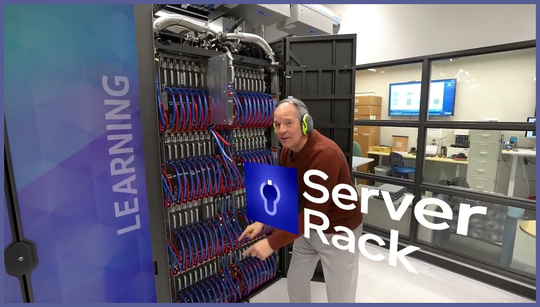
The installation of 10,624 blades, each containing two Xeon Max CPUs with Intel 64GB of on-package HBM2E memory and six Data Center Max 'Ponte' compute GPUs, has been completed. These blades are arranged into a configuration of 166 racks, with 64 blades per rack, resulting in a total of 21,248 general-purpose CPUs with over 1.1 million high-performance cores. The CPUs are supported by 19.9 petabytes of DDR5 memory and 1.36 petabytes of HBM2E memory.
With 63,744 compute GPUs and 8.16 petabytes of HBM2E memory onboard, the Aurora supercomputer is capable of handling both AI and HPC workloads. HPE's Slingshot fabric ensures seamless interconnection among the blades, catering to the demands of supercomputing applications.
Boasting a staggering performance of over 2 FP64 ExaFLOPS, the Aurora supercomputer becomes the first of its kind to achieve this level of capability. In addition to its immense compute power, the supercomputer provides rapid access to massive amounts of data. It consists of 1,024 storage nodes, offering 220TB of capacity and 31TB/s of total bandwidth, making it particularly well-suited for nuclear fusion research, scientific engineering, and weather forecasting.
While the installation of the Aurora supercomputer is complete, it has yet to undergo acceptance testing before becoming operational later this year. Once live, it is poised to surpass the theoretical peak performance of 2 ExaFLOPS, solidifying its position as the leader in supercomputing.
Intel's hardware has demonstrated superior performance compared to competitors, as evidenced in preliminary tests with real-world science and engineering workloads. To learn more about our experiences with the latest Intel Max Series CPU and GPU, check out our Intel Max Series CPU and GPU reviews.