
Iran's Quantum Computing Claims Debunked
When Iran recently announced its development of a quantum computer for military purposes, the tech world was skeptical. And it turns out, their skepticism was justified. Instead of a groundbreaking quantum processor, Iran presented an off-the-shelf ARM development board as their quantum computing product.
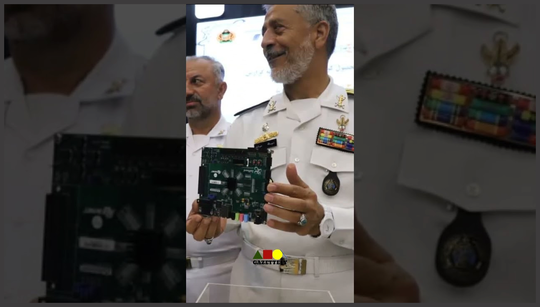
During a press conference held by Iran's Armed Forces General Directorate for Marine Industries, Rear Admiral Habibollah Sayyari proudly displayed the board, complete with a golden plaque, as a symbol of the country's progress in quantum computing.
However, it didn't take long for the tech media to uncover the truth. As seen in a clip from the conference, the device was identified as an ARM development board, not a true quantum processor.
After receiving backlash, Iran issued a follow-up statement acknowledging that their quantum announcement lacked any actual quantum technology. The research vice chancellor for Imam Khomeini University, Morteza Saffar, admitted, "The problem is not with how the announcement was worded, but rather with our media."
Despite this setback, Iran expressed continued interest in exploring quantum computing for military operations, particularly in improving maritime security.
Justin Sanchez, director of systems engineering at Rigel Quantum, explains that while FPGAs can be used in conjunction with quantum computers, the difference between an FPGA dev board and advanced quantum processors like Intel's Tunnel Falls QPU or IBM's Quantum System One is significant.
It remains unclear why Iran decided to enter the quantum computing race, but their participation will undoubtedly have implications for the nation's future.
As technology continues to evolve rapidly, staying informed and updated is crucial. By doing so, you can remain at the forefront of innovation and potentially capitalize on the opportunities presented by quantum computing.